

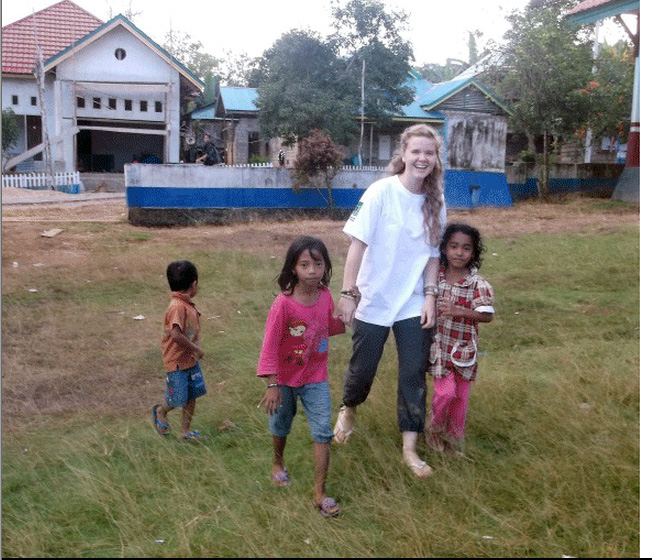
 MADISON HEWITSON spent a month in Indonesia, with Operation Wallacea.
After seventeen hours of non-stop travelling I finally arrived in Jakarta, Indonesia, where after a quick snooze in a Hotel (aptly named ‘Smile’) I was transported around the country until I finally arrived at my first destination. Laboundo-boundo is just one of the small villages on the Island of Bau-bau, containing some twenty houses. I was introduced to my ‘Mama’ and ‘Papa’, a couple who lived in the village. The wooden panelled house was balancing on stilts, to avoid the heavy rain that impacts Indonesia in the monsoon season. It had no kitchen or living room, and the toilet (‘Mandi’) was outside – a squat one and a bucket to throw water over yourself as an attempt to shower. How lucky we are with electric lighting, T.V, ovens, fridges and an endless array of consumer goods. Yet, as I began to get to know the students through teaching English at the local School, I found that they were just as happy (or even more so) as we are back here – always smiling and greeting us with inexhaustible enthusiasm.
I began my first week with countless hikes through the rain forest in Lambusago carrying out routine checks of pitfall traps with the Herpetofauna group, behaviour monitoring of macuaques (‘andoke’), trapping civets for data collection, recording bat calls and catching them with mist nets. It was extremely arduous and it was difficult to adjust to the smothering and sticky heat that refused to let your sweat evaporate, let alone to keep up with the dissertation and PhD students that I was helping with these surveys – just part of the large amount of work that Operation Wallacea is putting in to conserve Indonesia’s rain forests, which allows it to be the most bio-diverse country in the world. Its rain forests only cover 1% of the Earth’s surface area but contains 10% of the world’s known plant species, 12% of mammal species – including endangered orang-utans and critically endangered Sumatran tigers and rhinos – and 17% of all known bird species – not including more than half of Indonesia’s species yet to be found.
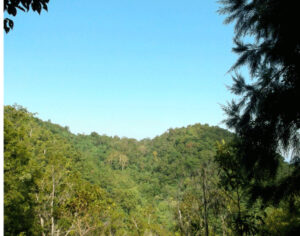 Throughout the second week I left the village and journeyed four hours deep into rain forest, up a hideously steep and muddy slope (appropriately named ‘death hill’), to arrive at the node camp ‘La Pago’. It contained a tent full of hammocks, lined up like slaves on a boat, a tent for eating and, of course; a squat toilet. However, this time you got to bathe in the cool, clear rivers that flow through the rain forest. Looking up to see a beautiful canopy above you, to hear bird song and to be clean for once, was ten times better than the ‘herbal essence’ adverts.
Unlike many common misconceptions the leeches in Indonesia live only on land and at around two inches they use their front and back end to move around and hunt you down. I found this out the hard way! Whilst collecting termites, for a research project in the entomology section of the London Science Museum, I was ambushed by what seemed to be a continuous flow of attacks from these little suckers. In my naivety I squealed and shook my leg for a while until it finally flew off. I learned it is best to stay calm and just flick it really hard until it comes off: they may be spine-chillingly creepy but they are an important part of the natural eco-system that makes the rain forest what it is.
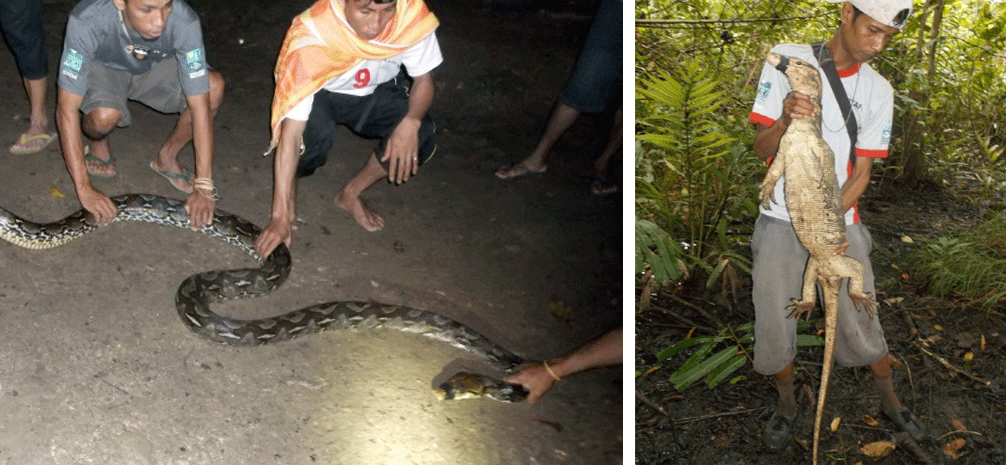 Apart from catching a Boa constrictor one evening, the ‘Andoke’ project was one of the highlights of my time there. Hiking through the rain forest (where we nearly trod on a king cobra!) with our satellites trying to track down macaques all day and recording their behaviour, taught me some key skills such as data handling and primate behaviour. As soon as we arrived on the Island of Wakatobi from yet another long boat journey, (an Indonesian man sung for the whole six hours!), we were rushed off to our houses and brought to dinner. Not only was the accommodation better but the food was too. We were having fresh barracuda nearly every night, which is sustainably fished from the reef that we were diving. It was delicious! Who would have known that you could make so many dishes with one fish! Diving on the fringing reefs of the coral triangle was one of the most spectacular things I have ever seen. The water was as clear as glass and sparkled florescent orange and blue from the phytoplankton. The reef was bursting with life, from sea crates to giant lion fish suspended as if flying upon the reef. Although, not everything was as serene as it seemed – we had to wake up at 6am, have three lectures, three dives, and an exam on corals or vertebrates every day (except ‘De-gas day’ the Indonesian Sunday, when we would play rounders or go for walks around the island) – for the majority of the time I was assisting dissertation students with their projects which was very rewarding as I was able to learn in depth about the diversity of fiddler crabs, the communication of anemone fish, how to complete a reef survey, diversity of the mangroves and much, much more.
Not only is Indonesia a beautiful and culturally rich country, it has also provided me with further knowledge from that which I acquired during my Extended Project last year. I have had a terrific experience and made some amazing friends, none of which would have been possible without the support of the Old Burians and I cannot thank you enough for your help and generosity.